Flowers and decor


Wedding cake is one of the few wedding elements that is both part of the decor and actually consumed by guests. A great cake looks beautiful in photos, adds ceremonial weight to the reception, and feeds the room — or, in 2026's more common approach, anchors a dessert moment while other sweets do the actual feeding. Mediocre wedding cake is remembered as the lowlight of the reception; great wedding cake is remembered as an unexpected highlight.
The ten tips below cover the decisions that consistently affect how a wedding cake lands: sizing, flavor combinations, structural design, delivery logistics, pricing, and backup planning. Think of the cake as a small vendor category with specific technical requirements — because a cake that collapses, arrives late, or runs out mid-serving is a memorable problem for all the wrong reasons.
Tip 1: Cake sizing assumptions are wrong. Traditional wedding-cake sizing charts assume every guest eats a slice — but in 2026, only 60 to 75 percent of guests typically take cake, and that number drops further if there is a dessert bar or late-night snack. Size accordingly.
Tip 2: Use this sizing formula. For 150 guests with a dessert bar alongside, a 3-tier cake (6-inch + 8-inch + 10-inch) feeding 80 to 90 servings is usually enough. Without a dessert bar, bump to a 4-tier serving 120 to 135. Ordering the full 150-serving cake when you also have a dessert bar consistently leaves 30 to 50 percent as leftovers.
Order smaller than the raw guest count suggests if you are also serving any other dessert — you will have plenty.
Tip 3: Pick flavors guests can identify. The wedding cake flavors that consistently land are the ones guests recognize and get excited about. Exotic or experimental flavors intimidate guests at a wedding; they produce cautious first bites and untouched second halves.
Reliable 2026 wedding cake flavors:
Tip 4: Different flavors per tier work when executed carefully. Many couples pick 3 flavors for a 3-tier cake, one per tier. This works if the bakery can execute all three well. Confirm at the tasting — some bakeries excel at one flavor profile and struggle with others. If a flavor is obviously weaker at the tasting, swap it out before the wedding.
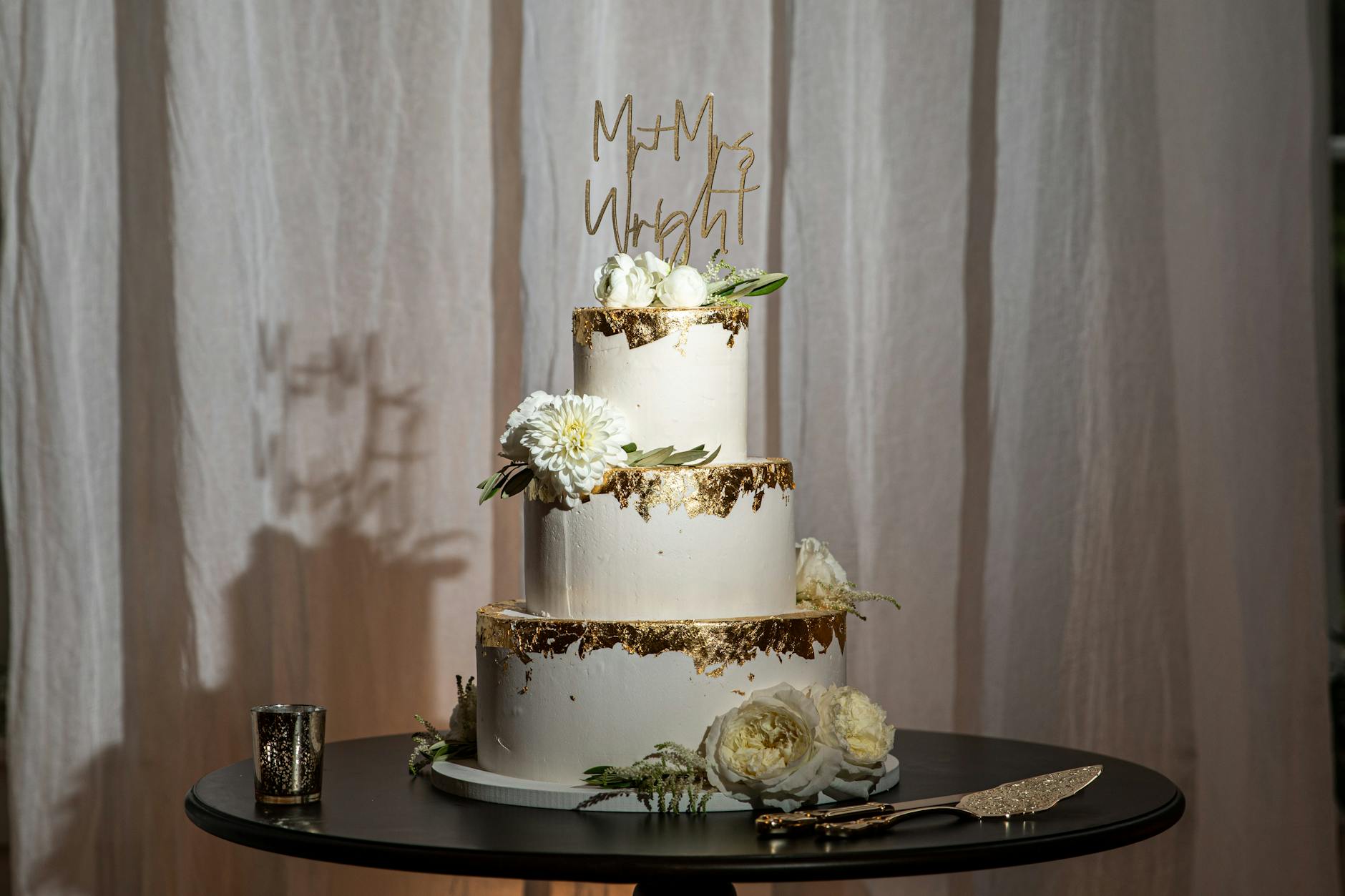
Tip 5: Minimalist designs age better than ornate ones. Wedding cake design trends date quickly. A heavily ornamented cake from 2017 (ruffle-style buttercream, oversized peonies, metallic trim) reads immediately as 2017. A clean, minimalist cake from 2017 still looks current. Pick designs that will age well — smooth buttercream, simple line detailing, a single moment of visual interest (fresh flowers, a small bow, a textured stripe).
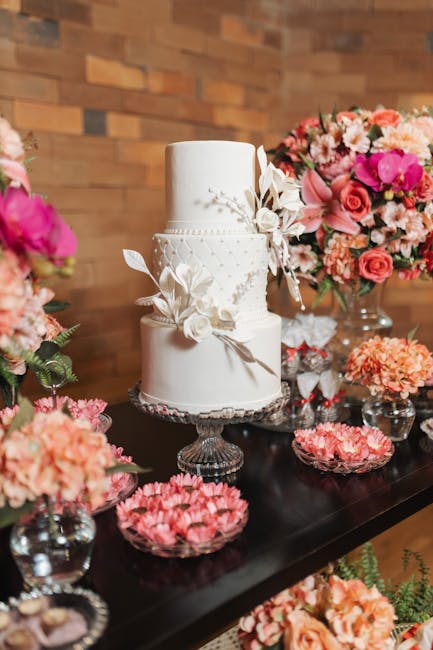
Tip 6: Fresh flowers beat sugar flowers for most couples. Sugar flowers are expensive ($200 to $800 per tier depending on complexity) and rarely photograph as convincingly as fresh ones. Fresh flowers from your florist's leftover stems add $0 to $100 to the florist bill and look unmistakably real. Exception: small delicate elements (tiny sugar leaves, ribbon, piped dots) that fresh materials cannot replicate.
Wedding cake pricing in 2026 runs $6 to $18 per serving at most US bakeries, with high-end specialty bakeries reaching $25 to $40 per serving. For a 100-serving cake, expect a total of $700 to $1,800 at most bakeries, $2,500 to $4,000 at premium studios. The variables that drive cost:
Get quotes in writing with itemized servings, flavors, delivery, and setup. A vague single-number quote often hides surprise costs.
Wedding cake delivery is the most logistically vulnerable part of the cake vendor's day. A well-made cake can be ruined in the last 30 feet between the delivery vehicle and the venue cake table. Confirm:
For outdoor weddings in summer, heat is a serious concern. Buttercream softens above 78°F and can collapse entirely above 85°F. Any outdoor wedding in summer needs either a fondant-covered cake, a shaded setup, or air-conditioned indoor storage until 30 minutes before cutting.
Never book a wedding cake without a tasting. Many couples assume that a bakery's portfolio is enough to choose them — but portfolio photos only show how cakes look, not how they taste. Tastings reveal the actual flavor profile, texture, and sweetness level.
How to run a good cake tasting:
Book tastings 6 to 9 months before the wedding. Tasting spots at popular bakeries fill up; do not expect to walk in at 3 months out and get a tasting the same month.
Wedding cakes occasionally fail to arrive or arrive damaged. The backup plan:
The backup plan is rarely needed, but rarely-needed does not mean never-needed. The 10 minutes it takes to set this up before the wedding is worth the protection.