Choosing the right vendors



The officiant is the only vendor who actually performs the wedding. They lead the ceremony, set its tone, and deliver the vows and pronouncement. Get the officiant right and the ceremony feels meaningful, well-paced, and emotionally landed; get the officiant wrong and the ceremony feels rushed, awkward, or impersonal — and there is no fixing it on the day.
The officiant decision deserves more thought than most couples give it. The framework below covers the four legitimate paths to choosing an officiant in 2026, the specific questions to ask each type, the warning signs to watch for, and the timeline that keeps the choice from becoming a last-minute decision in the final planning weeks.
Officiants come from four sources, each suited to different couples and different ceremony types.
Each path has different strengths. Knowing which one matches your priorities is the first decision; finding the specific officiant within that path is the second.
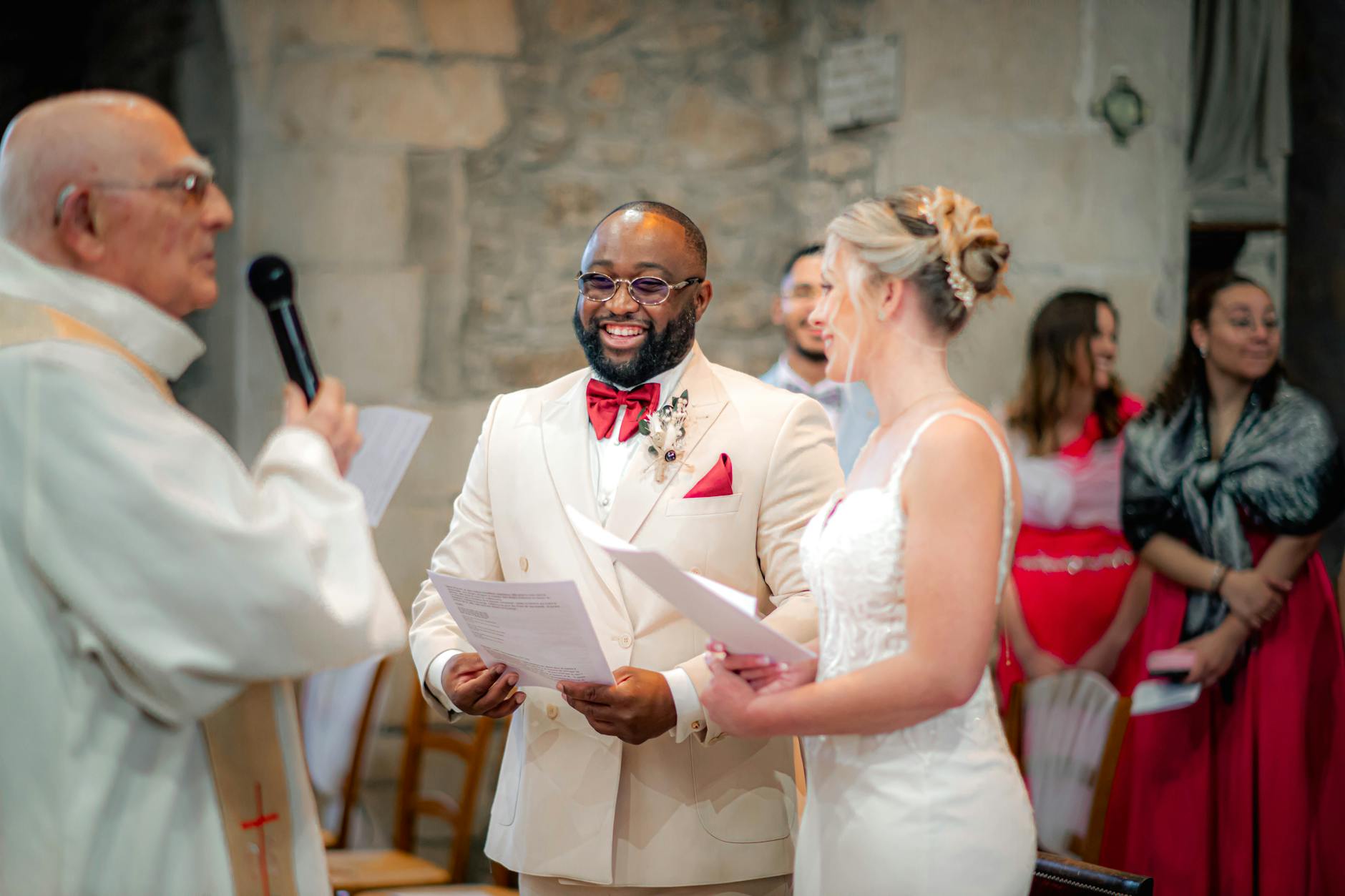
If your faith tradition is meaningful to one or both of you, clergy from your home congregation often produces the most resonant ceremony. The clergy member knows you, the service draws from a tradition with depth, and the spiritual weight of the ceremony is built in rather than constructed.
Practical considerations: most denominations require pre-marriage counseling (3 to 8 hours over several months), have rules about where the ceremony can be performed, and may restrict music, readings, or vow text. A few do not perform interfaith marriages or marriages of divorced persons. Confirm all of this at the first conversation, not at the rehearsal.
Cost: most clergy do not charge a fixed fee but expect a donation or honorarium of $250 to $1,000, plus travel costs for off-site weddings.
Professional celebrants specialize in writing custom non-religious (or lightly spiritual) ceremonies. A good celebrant meets with the couple multiple times to learn your story, drafts a custom ceremony script that reflects you specifically, and delivers it with the warmth and pacing of a trained public speaker.
What distinguishes a great celebrant from an average one: their writing. Ask any celebrant you are considering for a sample ceremony script (with names redacted, of course). The quality of the writing is the most reliable predictor of how your ceremony will land.
Cost: $500 to $1,500 for a fully customized ceremony in most US markets, higher in coastal cities. The price reflects the writing time as much as the day-of service. Worth the premium for couples who care about ceremony content.
Civil officiants — judges, justices of the peace, retired civil servants, court clerks — handle the legal side of marriage with minimum fuss. The ceremonies are typically short (10 to 15 minutes), use a standard secular script, and do not include the personalization that celebrants provide.
Best for: courthouse weddings, very short ceremonies, couples who want to focus the wedding budget elsewhere. Also a useful backup option for couples whose primary officiant becomes unavailable.
Cost: $50 to $400 in most US markets. Often the lowest-cost officiant option, with availability for last-minute bookings that other paths do not offer.
A close friend or family member ordained online specifically for your wedding. Universal Life Church and American Marriage Ministries are the two most-used platforms, and ordination is free or under $50.
Advantages: the officiant knows you personally, the ceremony is automatically meaningful, and the cost is minimal.
Risks: a friend who has never officiated may underestimate the work involved (drafting a quality ceremony takes 10 to 30 hours, plus rehearsal time). A friend who is uncomfortable speaking in front of crowds may freeze during the ceremony. A few US states (Pennsylvania, Tennessee, Virginia, certain counties in Massachusetts and New Jersey) have raised legal questions about online-ordained officiants — confirm with your county clerk before relying solely on this path.
If choosing this path: pick a friend who is both close to you and comfortable with public speaking, give them a structured outline to start from (your celebrant or planner can usually provide a template), and have them rehearse out loud at least three times before the wedding.
Whether interviewing a celebrant or briefing a friend, the same questions apply:
Book your officiant 6 to 12 months out for popular professional celebrants (especially for Saturday dates in May through October), 4 to 8 months out for friends or family officiants who need preparation time, and 8 to 12 months out for clergy from your home congregation if their schedule books up early.
Once booked, the work is not done. Plan to have the ceremony script finalized 4 to 6 weeks before the wedding. Last-minute changes — adding readings, swapping vow text, restructuring the order of service — are stressful for the officiant if they happen in the final two weeks. Lock the script early and treat any later changes as exceptional.
The officiant relationship is one of the most personal in wedding planning. Pick someone whose voice you would want to hear narrating one of the most important moments of your life — and then trust them to do the work you hired them to do.