Unique ideas


A wedding ceremony theme is not the same as a reception theme or a decor aesthetic. The ceremony theme is the underlying intention that shapes how the ceremony itself feels — its tone, its structure, its language, and the order of its rituals. A wedding can have a rustic decor theme but a deeply traditional Catholic ceremony theme, or a modern minimalist decor theme with a richly cultural ceremony theme.
Picking the right ceremony theme matters because the ceremony is the only part of the day where guests are actually still and paying attention. The reception is loud and distracting; the ceremony is quiet and focused. Whatever you put into the ceremony — the words, the music, the rituals — is what guests remember most clearly afterward. The themes below cover the most common approaches in 2026 and the questions that help couples narrow to the right one for their story.
A ceremony rooted in your faith tradition's established structure — Catholic Mass, Jewish chuppah, Hindu mandap, Muslim nikkah, Protestant denominational service. These ceremonies have well-defined orders of service, established readings and music, and clear roles for clergy and family.
Best for: couples whose faith tradition is genuinely meaningful to them or whose families place strong importance on it. Works in churches, temples, mosques, or any venue where the tradition's clergy will officiate.
Considerations: traditional religious ceremonies often have requirements that affect other planning (where the wedding can be held, what music is allowed, whether interfaith elements can be incorporated). Confirm all requirements with clergy at the first conversation, not at the rehearsal.
A ceremony with spiritual content but not strictly aligned with one religious tradition. Often officiated by an interfaith minister, a Unitarian Universalist clergy member, or a secular celebrant who incorporates spiritual readings and rituals.
Common elements: a unity ritual (sand ceremony, candle ceremony, hand-binding), readings from multiple spiritual traditions, contemporary music with reflective lyrics, vows that incorporate spiritual language without specific religious doctrine.
Best for: couples from different religious backgrounds, couples whose spiritual identity does not fit cleanly into one tradition, couples who want sacred meaning without specific religious framing. The ceremony format that most consistently works for interfaith and intercultural couples in 2026.
A ceremony built entirely around the couple's story, with no religious or strongly spiritual content. Officiated by a professional celebrant, a friend or family member ordained for the day, or a civil officiant.
Common elements: an opening reflection on the couple's story (how they met, why they chose to marry), readings from sources meaningful to the couple (poetry, books, song lyrics, letters), personal vows written by the couple, a meaningful unity ritual or symbolic gesture chosen by the couple specifically.
Best for: couples who want full creative control over the ceremony, couples without strong religious affiliation, couples who want a ceremony that is unmistakably and entirely theirs. Risk: a poorly written personalized secular ceremony can feel awkward or lightweight. Investing in a strong celebrant is the difference between a moving personalized ceremony and an uncomfortable one.
A ceremony that draws heavily from your cultural heritage — whether or not that heritage has a formal religious component. Examples: a tea ceremony (Chinese, Korean), a saptapadi or saath phere (Hindu), a handfasting (Celtic), jumping the broom (African American), a Filipino veil-and-cord ceremony, a quilt-tying or blanket ceremony (Navajo, other Indigenous American traditions).
Best for: couples who want to honor their heritage in a visible way, couples whose families have strong cultural traditions around marriage, couples in intercultural marriages who want to incorporate elements from both backgrounds.
Considerations: cultural heritage ceremonies are powerful precisely because they are ancient — but they require care to incorporate well. Work with an officiant or cultural advisor who understands the tradition deeply, not someone who is improvising from a brief description.
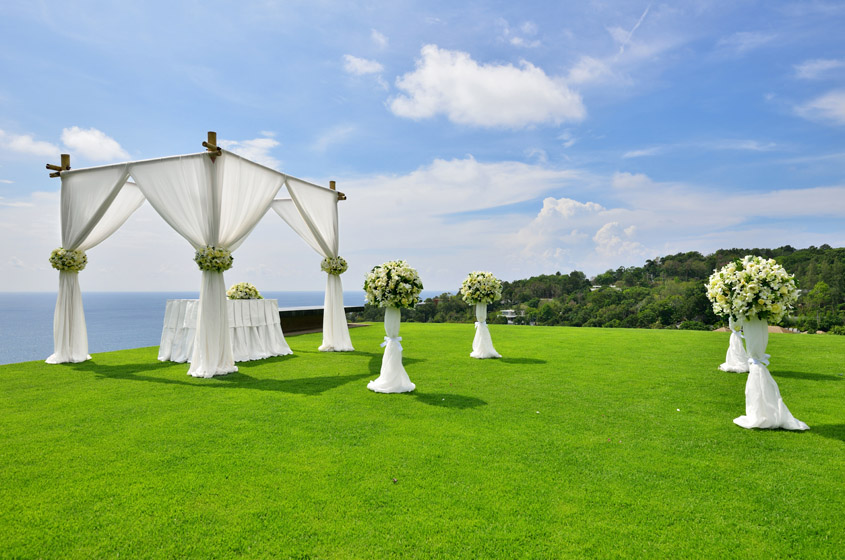
A ceremony that draws meaning from the natural setting itself — a mountain peak, a forest, a beach, an alpine meadow. The natural setting becomes the central visual and emotional element, and the ceremony incorporates references to nature, place, and the journey that brought the couple to this specific spot.
Common elements: a brief, intimate guest list (because most outdoor naturalist ceremonies happen at venues with strict capacity limits), short ceremony length (often 15 to 25 minutes), readings about nature or place, a simple unity ritual that incorporates natural elements (planting a tree, building a stone cairn, releasing seed pods).
Best for: couples whose relationship has been shaped by shared outdoor adventures, couples who feel most at home in nature. The right ceremony format for elopements and 30-to-50-guest destination weddings in dramatic outdoor venues.
Three questions narrow the choice quickly:
The answers usually point clearly to one or two themes. Where the answers conflict — say, you want a personalized secular ceremony but your family expects a religious one — surface that conversation early. Family conversations about ceremony content are easier four months before the wedding than four weeks before.
The most common ceremony-theme mistake is choosing a theme that conflicts with the dominant emotional reality of the wedding. A couple who picks a personalized secular ceremony because it sounds modern, but whose families are deeply religious, often ends up with a ceremony that feels uncomfortable to half the room. A couple who picks a traditional religious ceremony because it is expected, despite the fact that neither partner is religious, often ends up with a ceremony that feels hollow to themselves.
Pick the theme that matches who you actually are and what you actually believe — not the theme that is easiest, most expected, or most photographed on social media. The brides and grooms who look back happiest on their wedding ceremonies are the ones whose ceremony genuinely reflected them. The theme matters less than the alignment between the theme and the people standing at the altar.